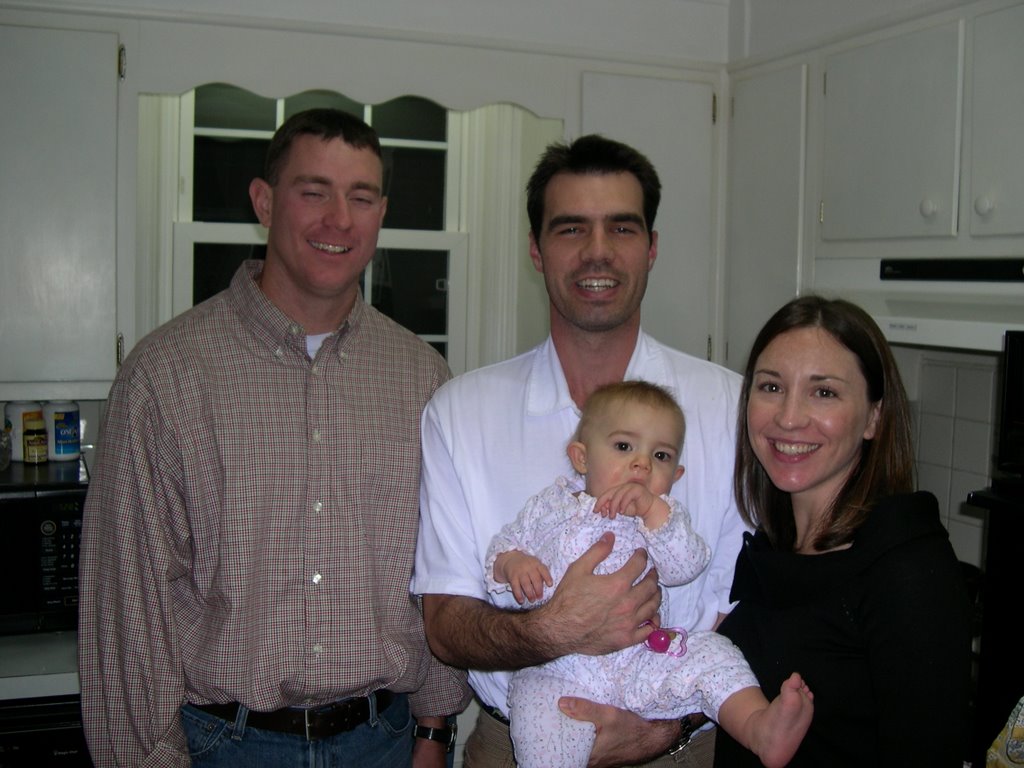
James Dickey's son Christopher, author of With the Contras and Summer of Deliverance, now Newsweek Paris Bureau ChiefMonday, January 22, 2007
The James Dickey Conference
James Dickey's son Christopher, author of With the Contras and Summer of Deliverance, now Newsweek Paris Bureau ChiefTuesday, January 16, 2007
James Dickey and Music
Friday and Saturday this week, the University of South Carolina hosts the James Dickey Conference, which comes on the 10th anniversary of his death. The James Dickey Newsletter and Society provides a schedule of events. My presentation Saturday afternoon concern's Dickey's own interest in music, specifically guitar playing, and its manifestation in the poetry--especially in Buckdancer's Choice, his fourth volume, which won the 1966 National Book Award.
Dickey was never better than in that collection, though some of his subsequent poems, such as "Falling" and "The Eye-Beaters" are among his best. Most critics agree that the poems of his last two decades do not measure up to the stunning, innovative early work. There's an argument to be made that his interests turned more to fiction as he attempted to follow up the blockbuster success of Deliverance with the less successful Alnilam and To the White Sea.
Two biographies of Dickey published since his death haven't helped his reputation: his son Christopher's bittersweet memoir, Summer of Deliverance, and Henry Hart's massive James Dickey: The World as a Lie. The bulk of his huge library is now housed in The James Dickey Library and Seminar Room in the Thomas Cooper Library at USC.
Saturday, January 06, 2007
Monet in Raleigh

Friday, January 05, 2007
Larson, Rosengarten, and Ray
Eric Larson's nonfictional Thunderstruck follows a strategy the author used to stunning effect in The Devil in the White City: the juxtaposition of two parallel story lines that initially seem to relate only tangentially but begin to complement and intersect with one another. In this case, one of Larson's accounts involves Marconi's tireless work on wireless communication, much of which took place in London, where he thought he had a better chance to have his work recognized. The other story line follows the career and relationships of Hawley Harvey Crippen, an American homeopathic doctor who made some money selling patent medicines and married a would-be opera singer with marginal talent. Living in London, the couple seemed happily married for a while, but the relationship ended in murder, a crime solved aboard a U.S.-bound ship with the aid of Marconi's wireless radio. Marconi's doggedly worked to perfect a technology that he had no real assurance could ever work. He proceeded largely by intuition, a sense that wireless communication over long distances was possible. His faith in this, his persistence, and his ability to develop it into a lucrative business, were almost superhuman. This story I find more engaging than that of the ill-fated Crippen.
After finishing Larson's book, I started in on All God's Dangers, a life story narrated by "Nate Shaw" (a pseudonym for Ned Cobb) transcribed by Theodore Rosengarten. Coincidentally, Cobb's life unfolds at the same time as the events in Thunderstruck. Cobb was born in 1885 and was interviewed in 1969. His powers of recall and the intensity of his narrative are amazing, especially for a man of 84. He grew up in Tallapoosa County, Alabama, not far from my hometown of Auburn. Although the locations in the book are fictionalized, I was able to identify many of the actual places by studying a map. He lived near the miniscule town with the actual name of Notasulga, only 20 miles or so from Auburn.
The third nonfiction book on my holiday reading list was Janisse Ray's Ecology of a Cracker Childhood, which I reread with pleasure in anticipation of Ray's visit to our campus later in the spring. I'll use this book as a text in my English Composition course. As with Larson's book, there are two story lines here. The first is an account of her life up through college, her upbringing in the town of Baxley, Georgia with parents who operated a car junkyard. The second is the awakening of her interest in nature, especially the charm of the longleaf pine forests that once dominated Georgia and the surrounding states but were decimated, overcut for lumber and turpentine. Her campaign is to save and expand these forests, which in turn means saving the entire ecosystem that they support.
Thursday, January 04, 2007
Remembering a Writing Teacher
Another recent death worth noting is that of James Brown, "The Hardest-Working Man in Show Business," who has a legitimate claim to his title as "Godfather of Soul." In recent years, his reputation has been marred by a string of arrests on firearms and domestic abuse charges. He was jailed for two and a half years as a result of a police chase between Georgia and South Carolina. Brown's BBC obituary.
Writing is a craft before it is an art; writing may appear magic, but it is our responsibility to take our students backstage to watch the pigeons being tucked up the magician's sleeve. The process of writing can be studied and understood. We can re-create most of what a student or professional writer does to produce effective writing. (AWTW, 2nd ed., p. 4)
Thursday, December 21, 2006
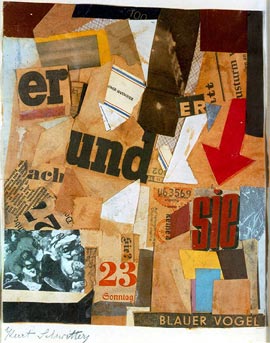
Orhan Pamuk's Nobel Lecture

This suitcase [containing his father's unpublished writing]
was a familiar friend, a powerful reminder of my childhood, my past, but now I couldn't even touch it. Why? No doubt it was because of the mysterious weight of its contents. I am now going to speak of this weight's meaning. It is what a person creates when he shuts himself up in a room, sits down at a table, and retires to a corner to express his thoughts – that is, the meaning of literature.
...
A writer is someone who spends years patiently trying to discover the second being inside him, and the world that makes him who he is: when I speak of writing, what comes first to my mind is not a novel, a poem, or literary tradition, it is a person who shuts himself up in a room, sits down at a table, and alone, turns inward; amid its shadows, he builds a new world with words.
...
The writer's secret is not inspiration – for it is never clear where it comes from – it is his stubbornness, his patience. That lovely Turkish saying – to dig a well with a needle – seems to me to have been said with writers in mind.
...
But once we shut ourselves away, we soon discover that we are not as alone as we thought. We are in the company of the words of those who came before us, of other peoples' stories, other people's books, other people's words, the thing we call tradition. I believe literature to be the most valuable hoard that humanity has gathered in its quest to understand itself. Societies, tribes, and peoples grow more intelligent, richer, and more advanced as they pay attention to the troubled words of their authors, and, as we all know, the burning of books and the denigration of writers are both signals that dark and improvident times are upon us.
...
All true literature rises from this childish, hopeful certainty that all people resemble each other. When a writer shuts himself up in a room for years on end, with this gesture he suggests a single humanity, a world without a centre.
...
As you know, the question we writers are asked most often, the favourite question, is; why do you write? I write because I have an innate need to write! I write because I can't do normal work like other people. I write because I want to read books like the ones I write. I write because I am angry at all of you, angry at everyone. I write because I love sitting in a room all day writing. I write because I can only partake in real life by changing it. I write because I want others, all of us, the whole world, to know what sort of life we lived, and continue to live, in Istanbul, in Turkey. I write because I love the smell of paper, pen, and ink. I write because I believe in literature, in the art of the novel, more than I believe in anything else. I write because it is a habit, a passion. I write because I am afraid of being forgotten. I write because I like the glory and interest that writing brings. I write to be alone. Perhaps I write because I hope to understand why I am so very, very angry at all of you, so very, very angry at everyone. I write because I like to be read. I write because once I have begun a novel, an essay, a page, I want to finish it. I write because everyone expects me to write. I write because I have a childish belief in the immortality of libraries, and in the way my books sit on the shelf. I write because it is exciting to turn all of life's beauties and riches into words. I write not to tell a story, but to compose a story. I write because I wish to escape from the foreboding that there is a place I must go but – just as in a dream – I can't quite get there. I write because I have never managed to be happy. I write to be happy.
Wednesday, December 20, 2006
Tough Choices
The New Commission makes the case that creativity will increasingly be as important to the American worker as technological skill. It notes, "This is a world in which a very high level of preparedness in reading, writing, speaking, math, science, literature, and the arts will be an indispensable foundation for everything that comes after for most members of the workforce." This sounds to me like an argument for a liberal education, an education in critical thinking and communicating, as well as in technical proficiencies.
The study group makes a series of recommendations, including the following:
- A system of exams given at the end of 10th grade that would determine what path students take--to a community college, to further accelerated high school study via AP or International Baccalaureate course, or to a trade school.
- Universal early childhood education beginning at age 3.
- Recruitment of the best high school students to become teachers.
- More open-ended, less multiple-choice testing.
- More schools operated by independent contractors.
- More state (vs. district) oversight of school financing, etc.
- Easier access to adult education.
- "Personal Competitiveness Accounts" for everyone to start at birth and to be available to use for educational expenses.
Tuesday, December 19, 2006
Monday, December 18, 2006
1776 and Christmas Trees

- Many cultures, including the Egyptians and Romans, treasured evergreens as symbols of everlasting life or the promise of spring renewal. The Romans celebrated Saturnalia at winter solstice, decorating with greens and exchanging gifts.
- Druids used evergreens in winter solstice celebrations, placing mistletoe and evergreen branches above their doors for good luck.
- Legend has it that 1,000 years ago St. Boniface, who converted Germany to Christianity, came across a group of pagans worshipping an oak tree. He angrily cut it down, whereupon a fir tree sprang up in its place. He took this as a sign of the Christian faith.
- From the Middle Ages, Germans and Scandinavians brought evergreens indoors to show hope for spring. Martin Luther began decorated indoor trees with candles around 1500. The candles supposedly represented the light of Christ or the star of Bethlehem.
- In New England, the Puritans banned not only Christmas trees but Christmas itself. So if the Hessians erected trees at Christmas in 1776, that was still an alien custom.
- Queen Victoria visited relatives in Germany, where she met Albert, whom she eventually married. Prince Albert brought the Christmas tree tradition from Germany to England, and the custom, including the practice of hanging blown glass balls from the branches, caught on.
- In 1851 Catskill farmer Mark Carr hauled two ox sleds of evergreens into New York City and sold them all. The Christmas tree tradition had begun to catch on. By 1900, one in five American families had a Christmas tree, and within 20 years, the custom was widespread.
Sunday, December 17, 2006
Fran Mancuso and John Burrows
I've just heard about the loss of another old friend, John Burrows, who was my colleague at Tougaloo College from when I joined the faculty there until John and Suzie (and son Joey) moved to Miami in 1981, where they lived for a time on a wooden houseboat. John took a job running the Writing Center at Florida International University. We had been out of touch with them in recent years, though we've always exchanged Christmas cards. It was in this year's card that Suzie told us John had died of cancer in October. Earlier this year, his brother Jim had also died of cancer. John was a great friend and fellow poet. He, along with our colleague John Monro, introduced me to the discipline of composition--still in its infancy in the late 70's. We attended CCCC conventions together and talked for hours about the teaching of writing. He had worked with Mina Shaughnessy when he was doing his grad work at the City University of New York. John was a New Yorker, grew up on Long Island. He loved sailing, Ireland, and W.B. Yeats (on whom he wrote his master's thesis--the "Crazy Jane" poems). He could play piano by ear. For a couple years, John, I and our families met for breakfast each Saturday, alternating houses. Joey was Nell's age. John was a smoker, and perhaps that did him in.
Thursday, December 14, 2006
Sweet Jane Desserts
###
Russell Jacoby's assessment of Hannah Arendt
###
Beyonce Knowles' "Deja Vu" from her new CD, B'day
###
Daphne A. Brooks' review of B'day
###
4oth Anniversay of Truman Capote's Black and White Ball
###
Whatever happened to Robert Pirsig?
###
A Jackson Pollock painting sells for $140 million.
###
The Goncourt brothers' journals
Monday, December 11, 2006
Family
This year's holiday photo collage, to be accompanied in the mail by Janne's annual list of extended family members, their locations, and occupations.
Here's Akane Igarashi, our "adopted" Japanese daughter from Sapporo, Japan. She enrolled at Francis Marion University, where I was introduced to her by exchange students from Russia and Ukraine. Akane subsequently transferred to the University of South Carolina, where she is majoring in journalism and minoring in photography. Her parents have visited us twice before and will return for Christmas--followed up by a trip to Orlando and then New York. Akane will graduate in May.Sunday, December 10, 2006
Magazines
In addition to the rhetoric and composition journals I subscribe to (College English, College Composition and Communication, Rhetoric Review, and Writing on the Edge), as well as The New Yorker, Newsweek, and The New York Times Book Review (Do I subscribe only to weeklies whose titles start with "New?"), I take various literary journals, altering my choices year to year. My current subscriptions include Southern Poetry Review (edited by my friend Bob Parham), Tar River Poetry, Atlanta Review (which I like for its international flavor), Crazyhorse, and Iron Horse Literary Review.The current issue of Iron Horse contains a series of "readings," by various well-known poets, fiction writers, and essayists. Each reading consists of a bio, a story/essay/series of poems, and a brief Q and A with the writer. One question to Kelly Cherry is "Have these poems undergone revisions?" She responds, "I started work on the sonnets in 1999 (though there'd been a half-sonnet from 1994 or thereabouts that I'd hung on to) and have rewritten all of them many, many times."
In contrast, Bob Hicok claims of his three poems, "These three were not revised, beyond how they were revised during composition. I tend to revise a great deal as I write, which is why I bow down to the computer.... While I don't believe 'first word, best word,' I trust the intention of that philosophy and want to come as close as I can to capturing my thoughts and emotions in a given moment. There's something lost for me once I rise from a poem into the day, something particular to each poem that I find almost impossible to get back. However long it takes, I try to finish each one on the initial go-round."
After her five poems, each motivated by a different line from a poem in Spanish, Leslie Ullman explains the origin of this series in her reading of a bilingual anthology of 20th-century American poetry edited by Stephen Tapscott. She chose this as a text for a poetry class. Then, she says, "My professionalism gave way to enchantment and then to irresponsibility as the energy in those poems entered me like a tonic and made me itch to write poems of my own rather than think about classes. I was particularly seduced by elements easiest to preserve in translation--swiftness of association, a delicious mixing of the senses, astonishing juxtapositions, and incantatory rhythms."
Reading this makes me want to return to my own free-form translations from poems by Eugenio Montale in Italian, a language I don't know. It also reminds me of the series of poems Melissa Morphew wrote in response to Pablo Neruda's questions in Libro de las preguntas (Book of Questions - 1974).
Sunday, December 03, 2006
Pat Hoy
I usually start out with a problem. I usually start out with a question I'm trying to answer. I seldom start out knowing what my idea is. I discover that in the process of assembling the stories, or they allow me to discover it because they've already assembled themselves.And later,
The images have already coalesced in my imagination and built up enough energy that they do what the Jungians call breaking the threshold of consciousness. And I have to pay attention to the images. They are presenting me with the thing I need to figure out. So I have to start with the image that's bugging me the most.
The joy and the value of the familiar essay is that it operates under the requirement that we deliberately see the writer's mind in motion. It is an illusion of the highest artistic order that we are actually seeing in the final form of that essay all of the writer's mind in motion. There are lots of things that get subtracted. There's a lot of shaping that goes on, but the requirement is that we retain the mind's movement, the reflection of it, so that we create the illusion that the listener, the reader, is actually getting to see the mind figuring out whatever it's figuring out. And the mind's got to be trying to figure out something other than itself.
Saturday, December 02, 2006
Mongo

My friend Bill Sherling, who owns The Gnu's Room used book store in Auburn, Alabama, loaned me Ted Botha's book, Mongo. The term mongo, new to me, refers to any discarded item that is retrieved. Botha, himself something of a mongo hound, profiles people in New York City who regularly cruise the streets looking for useful (or not so useful) discarded objects. He interviews people whose apartments are packed with rescued items, methodical treasure hunters who have unearthed valuable loot in their wanderings, and book scrounger cart pushers who know just where they're likely to locate a pricey first edition or a packet of old magazines at 3 a.m. There's even a chapter on food scroungers, who have learned where the best castoff produce, tofu, or sweets are likely to be found.
This book reminds me of my own modest life as a mongo hunter in Hiroshima, Japan. There were occasional scheduled days in the neighborhood when "oogomi" (large trash) was put out for pickup. If you hit the narrow streets early on those days, you could salvage all sorts of useful stuff. Japanese houses and apartments tend to be small and cramped enough so that no one can afford to keep too much, so some pretty desirable items wind up on the curb. I had arrived for my year in Japan with only several bags,and I rented an unfurnished apartment, so I was a shameless scrounger. I found a bicycle, several useful tables, and a chair or two, all within several blocks of my apartment.
over the years was sculpted lovelierBrouwer's second collection, Centuries, is a series of prose poems, each 100 words long. Here's half of one called "N"--showing the poet's mongo-loving lust for words:
and lovelier: lips pillowed, buttocks lifted
to a tight split peach. When her body
was flawless, pure leopard, he began
experiments. He tried time-release
injection--vanilla bean, lilac, rose--
So much that's not nice: napalm, nettles, nemesis, noose. Not to mention the basic no. Even the dictionary's blissful path from neck to nectar--a trembling fingertip fliding over her nipple, down around her navel--is choked by morbid vines from the intervening necro-root: -mania, -phagia, -philia. A few pages later, too fractious to define, six single-spaced columns of non-'s.
Wednesday, November 29, 2006
Memory and Poetry

I require my Advanced Poetry Workshop students to memorize and recite 2 poems, each at least 14 lines, one pre-20th century, one more recent. I'd like to begin making this requirement more of a careful recitation than a fumbling memory exercise. Too often, the memory work is a fight to the finish, a halting plod through the poem. Instead, I'd like it to be a performance that others can appreciate and applaud. I tell them that once they've memorized a poem well, they carry it around with them always, and no one can take it away from them.
I like being able to call to mind Richard Wilbur's "Merlin Enthralled" or John Donne's "A Valediction Forbidding Mourning" or Shakespeare's "That time of year thou mayest in me behold" whenever I want.
I admire poets who can recite their own work at length. I have committed only a couple of my poems to memory but should work on others.
Tuesday, November 28, 2006
Thirteen Moons
Charles Frazier and I received our Ph.D. degrees at the University of South Carolina in the same year, 1986, but I do not remember him. His dissertation was The Geography of Possibility: Man in the Landscape in Recent Western Fiction, 257 pages long and including chapters on Edward Abbey, Thomas McGuane, James Crumley, Barry Holsten Lopez, Elizabeth Tallent and Douglas Unger. He went on to write Cold Mountain, based on the story of his great-great uncle's trek back home from the battlefields of the Civil War. This tale of W.P. Inman won the National Book Award in 1997.Monday, November 27, 2006
Old Masters

Maurice Graham - Robert Altman - Robert Lockwood, Jr.
Obituaries of Maurice Graham, "King of the Hobos," and two influential Roberts (filmmaker Altman and bluesman Lockwood), who died on November 21.
Saturday, November 25, 2006
Family Thanksgiving
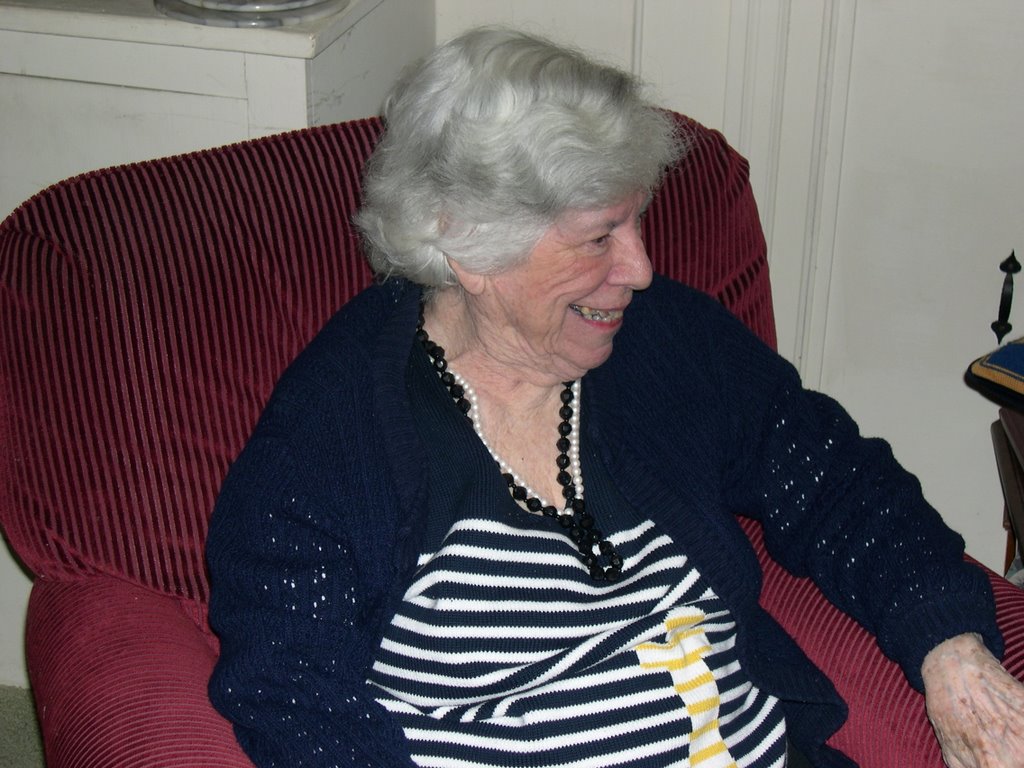
Family Matriarch Vera Autrey in New Chair
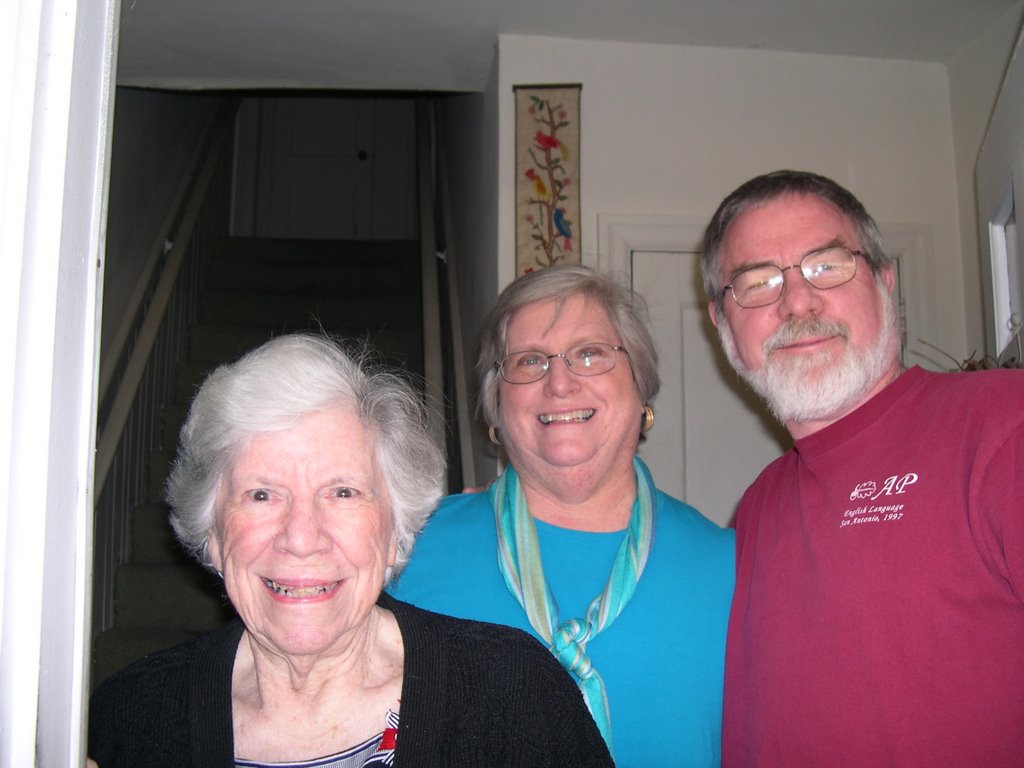
Vera, Jan, Ken
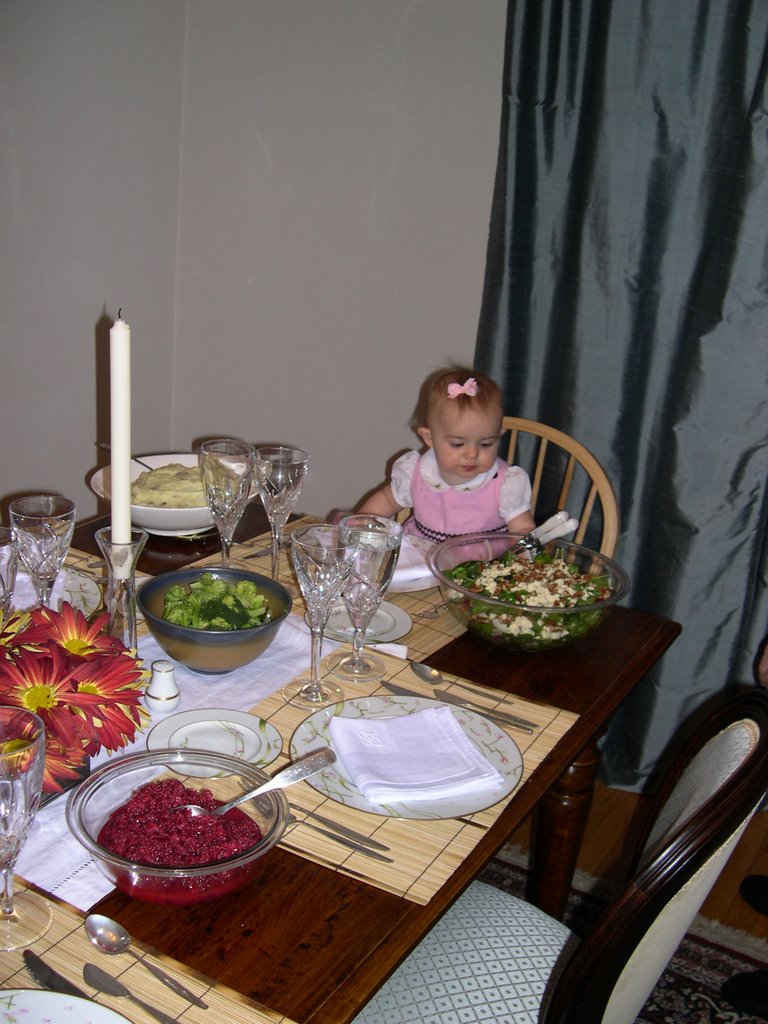
Jane Clare Bosher's First ThanksgivingWednesday, November 15, 2006
National Book Awards
- South Carolina's Jim Clyburn will probably be the new Democratic House Whip.
- O.J. Simpson will publish a book called If I Did It.
- Thanks to analysis of a 38,00-year-old bone fragment, scientists will soon know the entire Neanderthal DNA sequence.
- Scientists have grown human heart valves usisng stem cells from the fluid that cushions babies in the womb.
- According to Kathleen Parker, 1 in 3 homeless men is a vet, and 45% of those are mentally ill. 1 in 4 vets of Afghanistan and Iraq are diagnosed with a mental health problem.
- According to Thomas Friedman, China's rapid economic growth has led to extreme pollution. The country is "reaching its ecological limits."
Monday, November 13, 2006
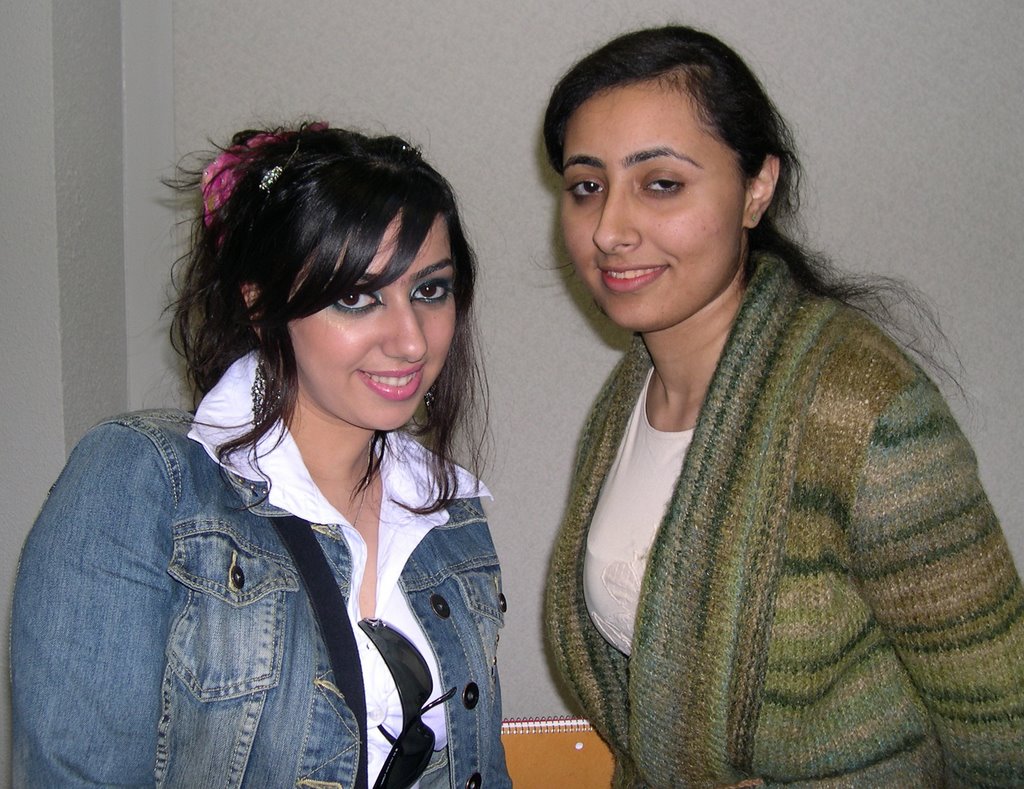
Kalnah and Noaf
Sunday, November 12, 2006
Googling Myself
Saturday, November 11, 2006
Pee Dee Fiction Festival
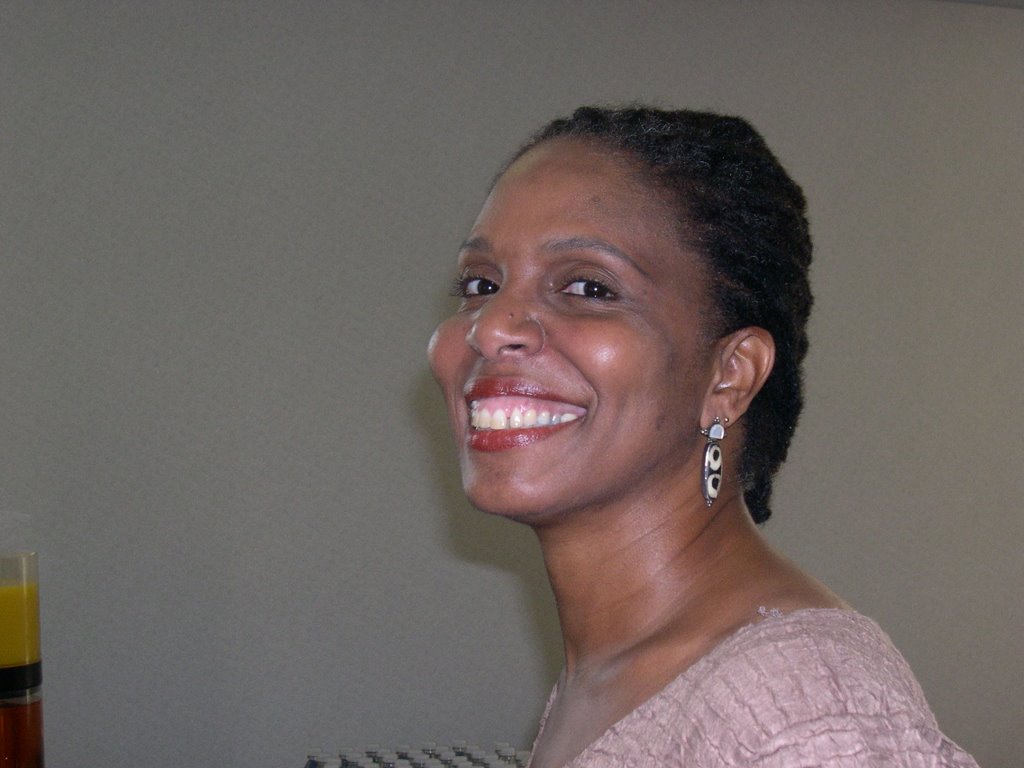
Back in the mid-eighties, Ellen Gilchrist did a series of regular commentaries on National Public Radio. Her Mississippi voice had a spacy southern lilt; she drifted lightly and bemusedly through her vivid anecdotes and observations, but the voice held something sturdy and intractable too. When she began to read a story on the first night of the FMU's Pee Dee Fiction Festival, that firmly delicate voice came back to me over the distance of over twenty years. She read well, with humor and a little good-natured profanity.In the Q and A period, she said that poetry had been a stronger influence on her than fiction, especially the work of Edna St. Vincent Millay and Robert Frost. Her first publications in the seventies were books of poems rather than the stories and novels she later became known for. This morning, talking about books that have influenced her, she praised Cormac McCarthy and of his most recent, The Road, said, "I've read so many bad reviews of it, I can't wait to read it." She mentioned Welty as a friend and Faulkner as an intimidating model who is so dominant in his influence that "you can't read him within six weeks of writing anything lest you be unduly swayed by his style."
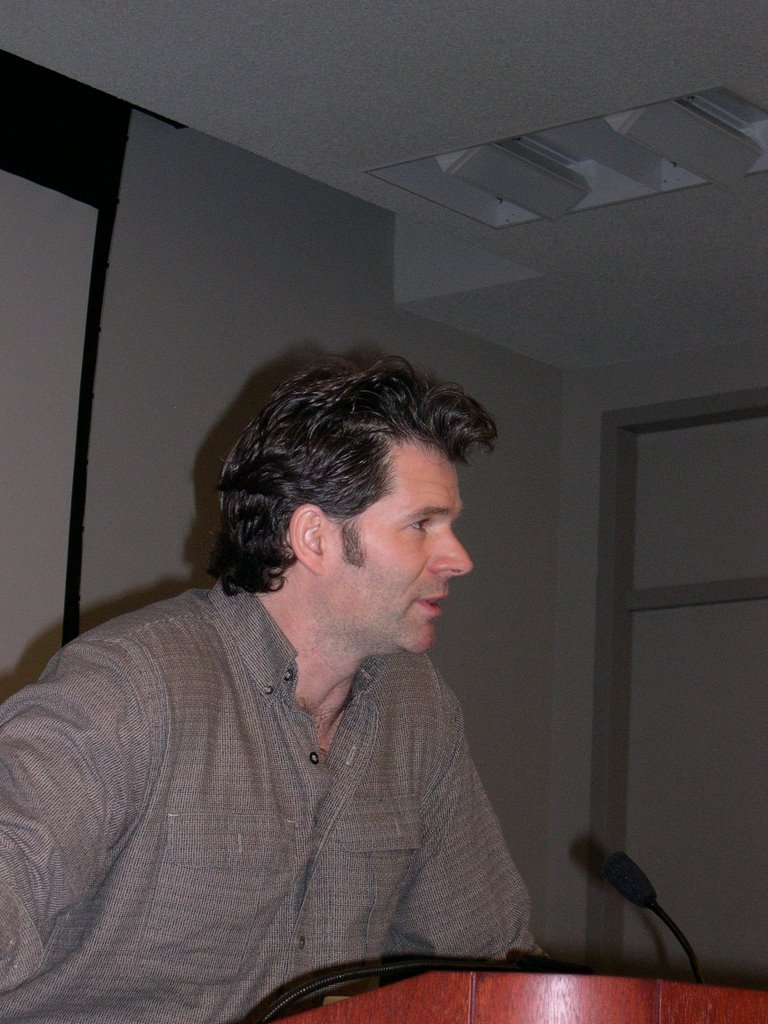
In a colloquium Thursday afternoon and again at his reading last night, Andre Dubus III proved lively, accessible, and engaging. He stressed just the things I like students to hear from writers: write about what you know, revise mercilessly, be specific, read everything. He loves to quote other writers, like Hemingway ("Get the whats, not the whys.") Students were no doubt most interested in his stories and observations about House of Sand and Fog, which many of them have read this semester. We learned from him that he played a bit part as a cop in the movie, that he modeled Colonel Behrani after the father of an Iranian woman whom he loved, and that the story of the house originated in a new article about a woman whose house was wrongfully repossessed in California. We learned that he wrote much of the novel in his car, parked in a cemetery in Newburyport, MA.In the early seventies, Janne and I visited Richie Arenberg in Newburyport and made grave rubbings at a cemetery there. When I compared notes with Dubus and mentioned the gravestone of the boy who had drowned in the cemetery pond and the woman whose epitaph said she choked on a pea, he said that was the same cemetery. And he told about a few of his favorite tombstones.
This morning he spoke on books that have most influenced him: The Grapes of Wrath and The Stories of Breece D J'Pancake. Afterwards, we talked a bit about Pancake, and I told him I remembered reading "Trilobytes" in The Atlantic and being blown away by it back in the seventies.
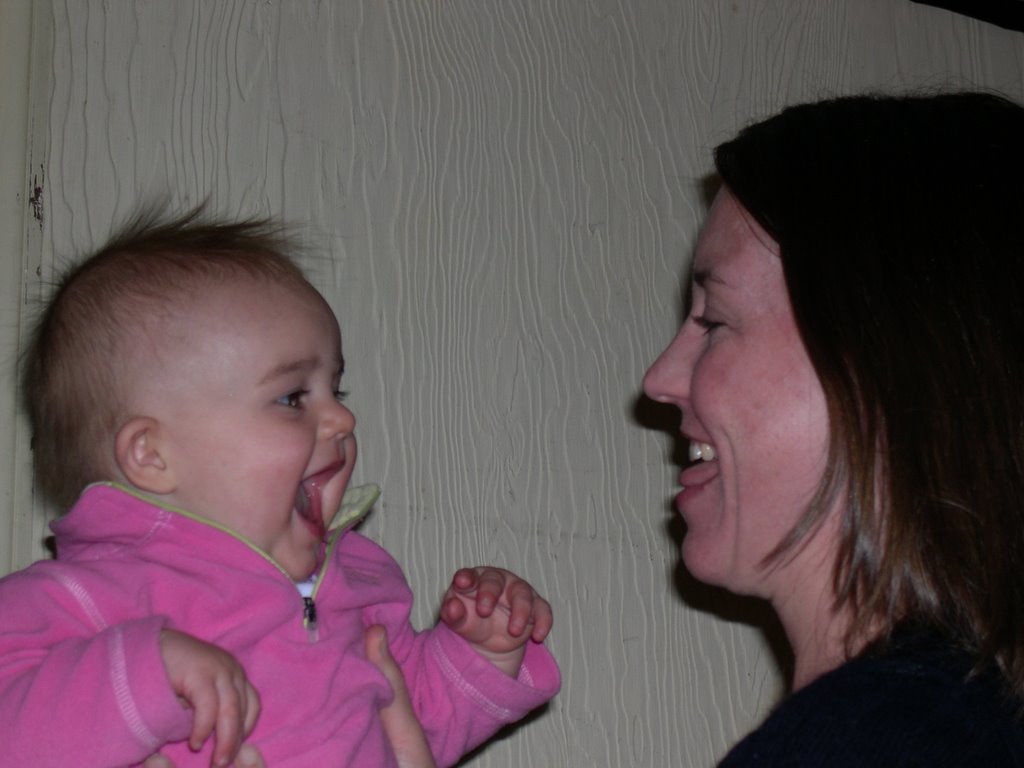
I first heard of Dianne Johnson when Nell attended the summer Governer's School in Charleston back in 1989. Dianne taught the American Autobiography course Nell was so impressed with. Soon after, Dianne joined the University of South Carolina English faculty, where she has since been teaching courses in children's literature and writing children's books.This morning I had breakfast with Dianne, Jon Tuttle, and Joe Kennedy at Venus Pancake House in town. I haven't eaten there since the old days when a group of English faculty regularly met there for Friday breakfast after Thursday night poker games. Dianne talked about her daughter Niani, a 12-year-old dancer who went to California to work with Debbie Allen in July. Dianne took her along on a trip to China in August.
Dianne spoke this morning on books that had influenced her to write children's books. She showed us a book she wrote based on the photos of Richard Samuel Roberts, an African American photographer who worked in Columbia. This afternoon, she showed Powerpoint slides from some of her books and talked about how she wrote them. Especially notable: her recent book about her dolls (selected from her collection of 150) and the forthcoming book about her late husband, illustrator Tom Feelings.
Tuesday, November 07, 2006
Election Day


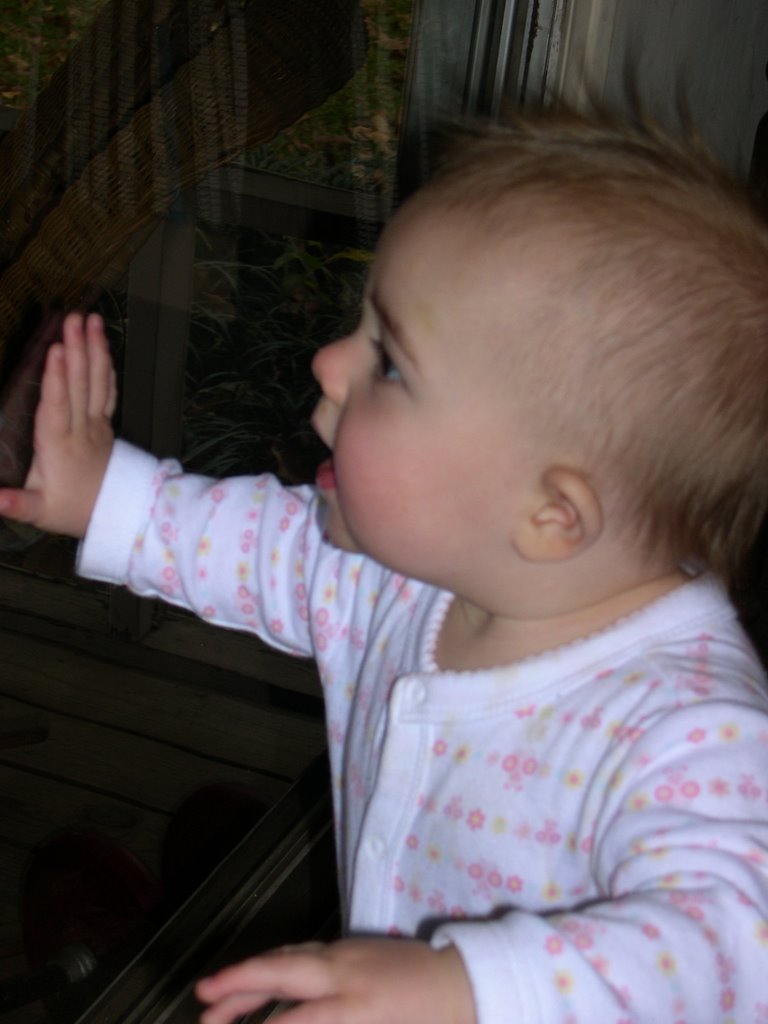
Jane Clare in Columbia
Janne and I spent Saturday overnight in Charleston babysitting granddaughter Jane Clare while Tess and Matthew went to a wedding. The Bosher threesome is now in Columbia for a few days. She toddles, falls gracefully, sits with left leg doubled under her and right leg extended, tastes everything she can get her new teeth on, chases the cat, gnaws at apples, drinks soy formula, sleeps at 9:30, 3:30, and 8:30, hears Good Night Moon each night before bed.
Saturday, November 04, 2006
House of Sand and Fog
My English 200 Honors class is reading House of Sand and Fog as we anticipate the campus visit of the author, Andre Dubus III, next week. He'll be at Francis Marion as a headliner in our Fiction Festival, which will also feature Ellen Gilchrist and Dinah Johnson. Rereading the novel, I find myself even more sympathetic to the Iranian family that has purchased a house in California that was repossessed by the county but is still claimed by the original owner, who ignored tax bills, thinking she had already paid them. The novel pits Kathy, a down-and-out cleaning woman, against Behrani, a refugee from Iran who was formerly a wealthy Colonel in the Shah's army but is now struggling to make a go of it in the U.S. Things get complicated when Lester Burdon, a deputy sheriff, takes an interest in Kathy's pitiful plight and then falls in love with her while trying to find a way to extricate himself from an unhappy marriage. Friday, November 03, 2006
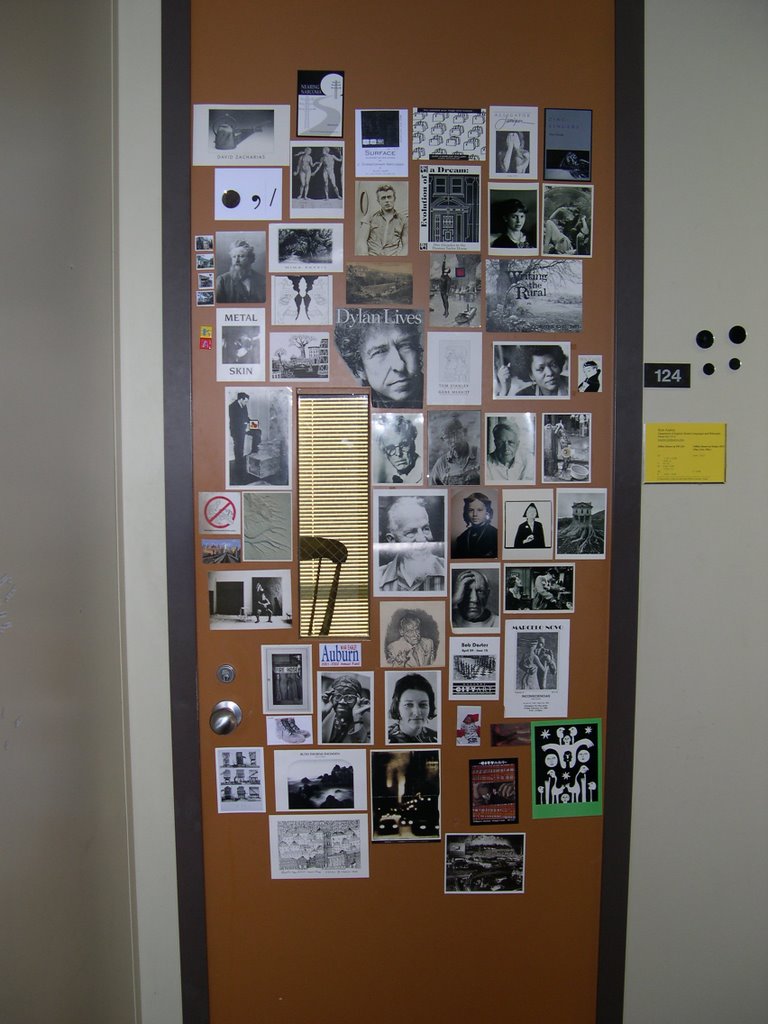
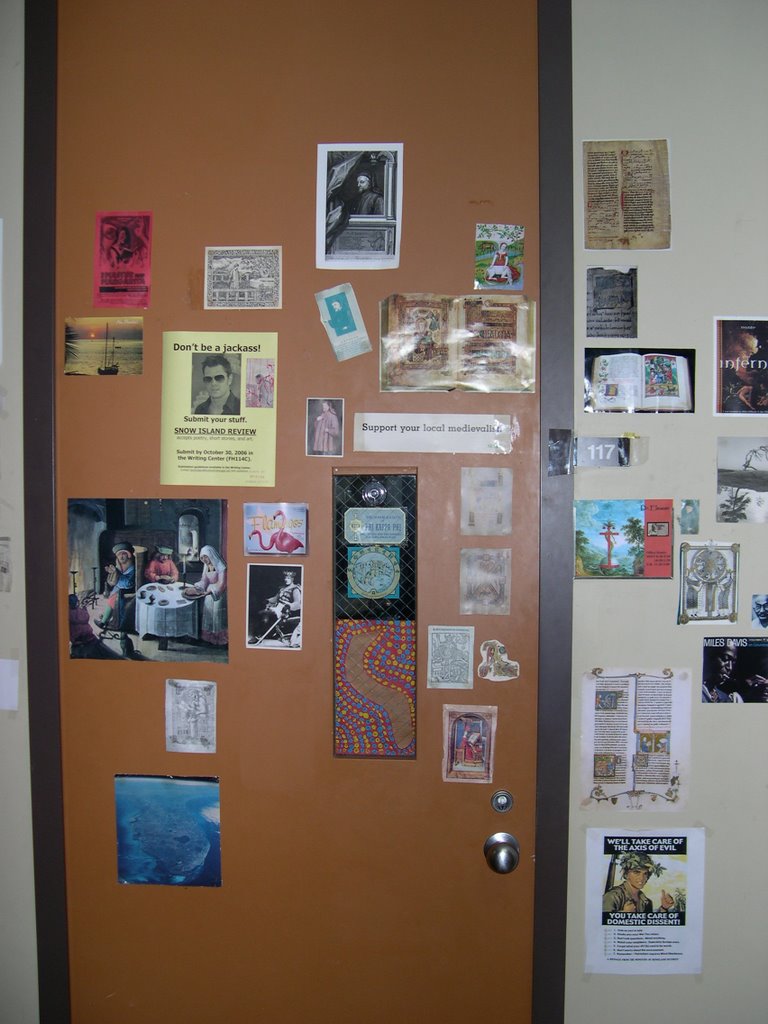
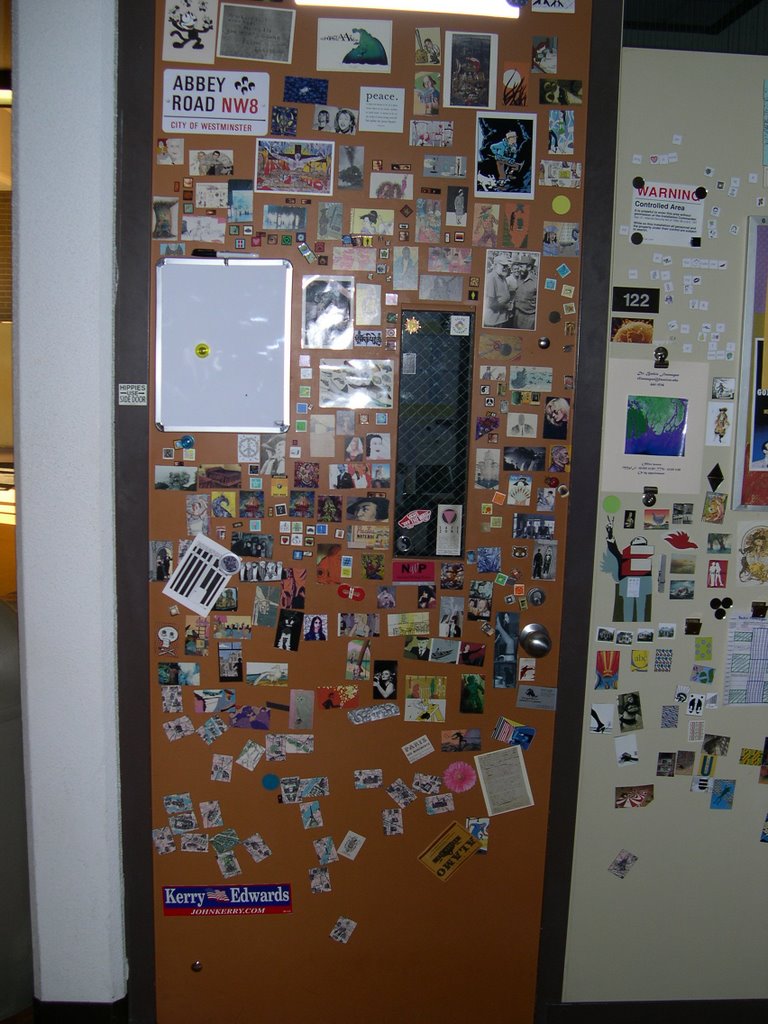
Doors of Founders Hall
The blogger in his office at 7 a.m.###
Obituary for anthropologist Clifford Gertz, who died October 30
Thursday, November 02, 2006
William Styron

William Styron died at 81 yesterday on Martha's Vineyard. The cause of death was pneumonia, although he had been in ill health for several years. I remember reading Lie Down in Darkness and The Long March back in the sixties and, like many, finding in them echoes of Faulkner, although Styron disdained any attempt to mark him as a "southern writer," and in the end his work did defy any such limiting label. I was most impressed with The Confessions of Nat Turner, published in 1967 and winning the Pulitzer Prize. I was shocked when, after a slew of rave reviews, the book began to draw fire, especially from African-American critics who questioned Styron's right to address the issue of slave rebellion by identifying with Turner. In fact, the book was backed by copious and painstaking research, as was his later novel, Sophie's Choice, a National Book Award winner which was widely praised but like Nat Turner, was criticized. In that case, the beef was that Styron, a non-Jew, wrote about the holocaust by focusing on Sophie--a Polish Catholic rather than a Jew. I have nothing but admiration for his work in both novels. Several years ago I heard Styron speak at the University of South Carolina. To my surprise, he was--some 30 years after the publication of Nat Turner--still defending his decision to write about that topic.
The most recent of his books I've read was Darkness Visible, a wrenching and fascinating description of his intense bouts of depression, which left him utterly immobile. Apparently, this problem commenced when, in 1990 he quit drinking.
Outside his workroom in Connecticut, he tacked a piece of cardboard with a quotation from Flaubert written on it: “Be regular and orderly in your life, like a good bourgeois, so that you may be violent and original in your work.”
George Plimpton interview with Styron in 1968 following the publication of The Confessions of Nat Turner.